
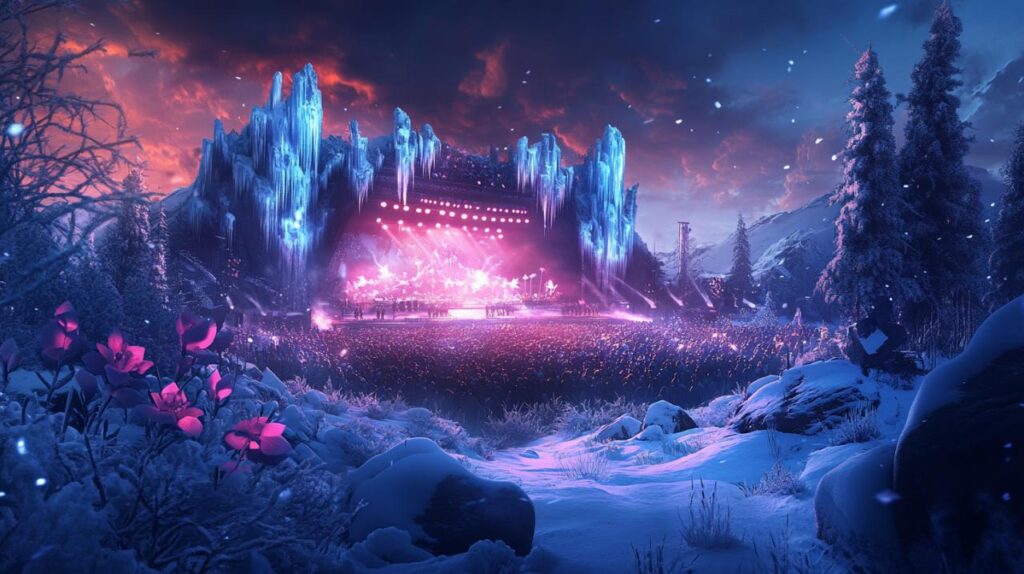
The convergence of rock music and innovative stage design has long captivated audiences, pushing the boundaries of what live performance can achieve. Among the most striking developments in recent years is the incorporation of nature-inspired elements that transform concerts into multisensory spectacles. When frozen artistry meets the raw energy of rock festivals, the result is a mesmerizing blend of visual drama and acoustic engineering that challenges traditional notions of stagecraft.
The science of frozen artistry: how ice flowers enhance visual spectacle
At the heart of this artistic revolution lies the intricate beauty of ice flowers, or Eisblumen, which have emerged as a compelling feature in contemporary stage design. These delicate crystalline formations are not merely decorative elements but carefully engineered installations that interact dynamically with lighting systems. The transparency and geometric complexity of ice structures create a canvas for light refraction, scattering beams in unpredictable patterns that animate the stage with an almost ethereal quality. This interplay between solid matter and luminous energy transforms static ice into a living, breathing component of the performance, where every shift in lighting casts new shadows and highlights across the frozen surfaces.
Crystalline Structures and Light Refraction in Stage Design
The physics governing ice flowers is rooted in the molecular arrangement of water as it transitions from liquid to solid. Ice crystals naturally form hexagonal patterns, a structure that maximizes stability while creating intricate facets capable of bending light at various angles. Stage designers have harnessed this natural phenomenon by positioning ice installations to capture and redirect stage lighting, effectively turning each frozen element into a prism. The result is a cascade of colours and reflections that shift with every movement of the performers and every change in the lighting rig. This approach echoes broader trends in stage design that draw inspiration from nature, such as the use of ice caves and plant cells, which have been employed in major festivals to create immersive environments. The hexagonal geometry of ice mirrors designs seen in other contexts, where honeycomb structures and blackout fabric have been shaped into hundreds of pieces to envelop audiences in a cocoon of visual intrigue.
Temperature control and preservation techniques during live performances
Maintaining the integrity of ice-based installations during the heat and energy of a rock festival presents formidable technical challenges. The ambient temperature at outdoor venues, combined with the warmth generated by thousands of spectators and high-intensity lighting, can quickly compromise frozen elements. To address this, stage engineers employ advanced refrigeration systems that circulate coolant through concealed channels embedded within or beneath the ice structures. These systems must operate silently and reliably to avoid interfering with the acoustic experience, a requirement that demands precision engineering. Additionally, the choice of ice composition plays a critical role. Clear ice, free from impurities and air bubbles, not only enhances light refraction but also melts more uniformly, reducing the risk of sudden structural failures. In some cases, designers incorporate synthetic materials that mimic the optical properties of ice while offering greater durability, though purists argue that nothing replicates the authentic shimmer and unpredictability of genuine frozen water.
Acoustic engineering: the interplay between ice formations and sound waves
Beyond their visual impact, ice installations exert a profound influence on the acoustic environment of a performance space. The physical properties of ice, including its density and rigidity, affect how sound waves propagate, reflect, and are absorbed. Understanding these dynamics is essential for stage designers who seek to balance aesthetic ambition with the demands of audio quality, particularly in the high-decibel context of rock festivals where clarity and power are paramount.
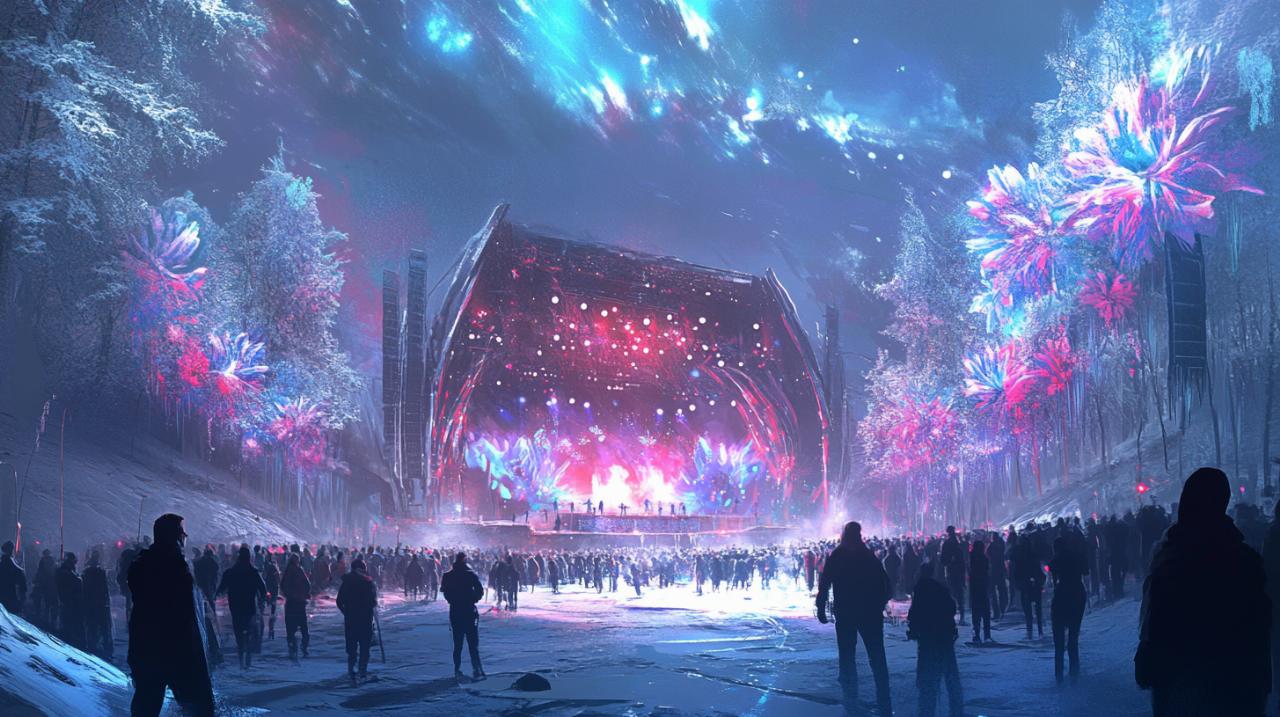
How Frozen Elements Affect Sound Reflection and Absorption at Rock Festivals
Ice, with its smooth and hard surface, acts primarily as a reflective material for sound waves. When positioned strategically, ice formations can direct sound towards specific areas of the audience, enhancing the listening experience in zones that might otherwise suffer from acoustic dead spots. However, this reflective quality also poses risks. Excessive reflection can lead to undesirable echoes and a muddying of audio clarity, particularly in open-air venues where sound management is already complex. To mitigate these issues, acoustic engineers collaborate closely with stage designers, using predictive modelling software to simulate how ice structures will interact with sound emanating from speaker arrays distributed across the venue. In some festivals, over 200 lights are spread around the floor, audience, and performers, creating a need for coordination between visual and auditory elements. The placement of ice installations is adjusted iteratively, balancing visual impact with acoustic performance to ensure that neither is compromised.
Balancing Visual Drama with Audio Quality in Open-Air Venues
Achieving harmony between visual spectacle and sonic excellence requires a nuanced understanding of both disciplines. Open-air venues present unique challenges, as sound dissipates more readily in the absence of walls and ceilings to contain it. Ice installations, if poorly positioned, can exacerbate this issue by scattering sound in unintended directions. Yet, when integrated thoughtfully, they can contribute to a more immersive auditory experience by creating focal points that guide sound waves towards the audience. This principle is exemplified in festivals that employ multiple stages, each with its own design philosophy. For instance, designs inspired by ice caves and plant cells have been used to create distinct acoustic and visual identities for different performance areas. The use of rock-like fixtures hanging above the audience not only adds visual drama but also serves as strategic points for mounting speakers and lighting, ensuring that technical requirements are seamlessly woven into the artistic vision. This holistic approach, championed by designers such as Anatol Fried, Valentin Lüdicke, and Greg Sullivan, underscores the importance of interdisciplinary collaboration in modern stage design.
Creating Atmosphere: The Theatrical Impact of Eisblumen in Live Rock Settings
The true power of ice flower installations lies not merely in their technical execution but in their ability to evoke emotion and transform the audience's experience. By merging the raw, untamed energy of rock music with the serene, crystalline beauty of frozen nature, designers create a juxtaposition that heightens the impact of both elements. This fusion challenges audiences to engage with the performance on multiple sensory levels, blurring the boundaries between concert and art installation.
Merging natural aesthetics with high-energy rock performance
The aesthetic appeal of ice flowers is rooted in their transience and fragility. Unlike permanent stage structures, ice installations are ephemeral, existing only for the duration of the performance before succumbing to the inevitable forces of heat and time. This quality imbues each concert with a sense of urgency and uniqueness, reinforcing the idea that the experience is fleeting and irreplaceable. For rock festivals, which thrive on energy and spontaneity, this alignment with the ephemeral is particularly potent. The contrast between the delicate, almost sculptural beauty of ice and the visceral, sometimes chaotic nature of rock music creates a dynamic tension that captivates audiences. Designers draw on a rich palette of natural imagery, from ice caves to honeycomb structures, to craft environments that feel both familiar and otherworldly. The use of blackout fabric shaped into hundreds of pieces to form geometric patterns, for example, demonstrates how even industrial materials can be transformed into elements that evoke the organic complexity of nature.
Audience Experience and the Sensory Journey of Frozen Stage Installations
For attendees, the presence of ice flowers transforms a rock concert into a multisensory journey. The visual spectacle of light refracting through ice, the subtle coolness that radiates from the installations, and the way these elements interact with the pulsating rhythms of the music combine to create an immersive experience that transcends traditional concert formats. This approach has roots in the broader movement towards experiential design, where the goal is not simply to present a performance but to envelop the audience in an environment that engages all the senses. Festivals held in cities such as Madrid, Mannheim, and New York City have embraced this philosophy, incorporating designs that surround attendees with light and scenography across multiple stages. The result is a curated journey where each stage offers a distinct atmosphere, from the cell-like structures that evoke microscopic worlds to the cavernous expanses reminiscent of ice caves. This diversity ensures that audiences remain engaged throughout the event, their attention continually captured by new visual and auditory stimuli. The integration of ice flowers into this tapestry of design choices exemplifies how a single element can elevate the entire experience, turning a concert into a memorable spectacle that resonates long after the final notes have faded.
