
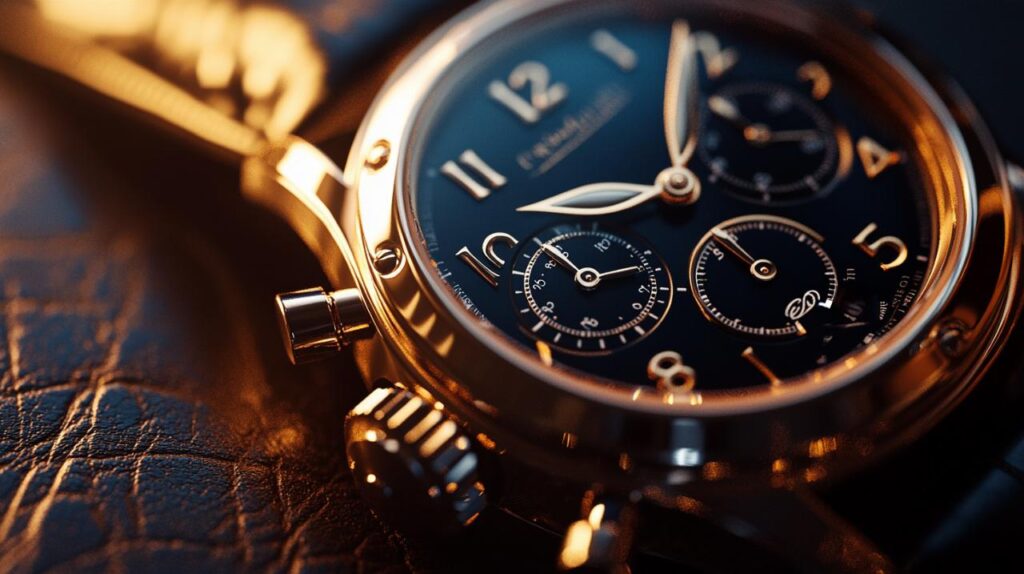
The story of how numbers found their way onto the wrists of countless individuals begins centuries before the first mechanical clock ticked its way into existence. The numerals we now glance at dozens of times each day carry with them a rich tapestry of cultural exchange, mathematical innovation, and design evolution. Watches adorned with Arabic numerals are not merely functional instruments; they represent a convergence of Eastern intellectual achievement and Western craftsmanship, blending clarity with elegance in a manner that has endured through the ages.
The Journey of Arabic Numerals: From Medieval Manuscripts to the Wrist
How eastern mathematics revolutionised western timekeeping
Long before the advent of the wristwatch, the Hindu mathematicians of ancient India were developing a numerical system that would fundamentally alter the course of human knowledge. Around the sixth century, these scholars refined a set of symbols that would later be recognised across continents as the digits zero through nine. The invention of zero in 628 AD marked a pivotal moment in mathematics, introducing a concept that allowed for unprecedented computational sophistication. These Brahmi numerals travelled along the Silk Road, carried by traders and scholars who understood their transformative potential. Arab mathematicians embraced and refined the system, adapting it for use in astronomy, commerce, and daily life. By the time these figures reached Europe, they had become known as Arabic numerals, a name that endures despite their Indian origins. The superiority of this system over the cumbersome Roman numerals became evident almost immediately; calculations that required laborious mental gymnastics with Roman figures became straightforward with the Hindu-Arabic system. The spread of these numerals through medieval manuscripts and the works of scholars laid the groundwork for their eventual adoption in the burgeoning field of horology.
The Adoption of Arabic Figures in Early Clockmaking
As clockmaking evolved from large public timepieces to more personal instruments, the choice of numerals became a matter of both practicality and style. In the nineteenth and twentieth centuries, watchmakers began to favour Arabic numerals for their unparalleled legibility and ease of use. The shift was gradual but decisive, driven by the demands of an increasingly mobile and industrialised society. Military watches, in particular, embraced Arabic numerals for their functional advantages. Pilots navigating the skies and divers exploring underwater realms required instruments that could be read at a glance, without the ambiguity that Roman numerals sometimes introduced. The bold, straightforward design of Arabic figures offered clarity that was essential in high-stakes environments. This practical orientation did not diminish the aesthetic appeal of the numerals; rather, it enhanced their reputation as a symbol of modernity and precision. The transition was not uniform across all watchmaking traditions, with some brands and styles continuing to favour Roman numerals for their association with formality and heritage. Yet the tide had turned, and Arabic numerals became the dominant choice for those who valued function alongside form.
Design philosophy: why arabic numerals dominate contemporary dials
Legibility and Functionality in Modern Timepiece Design
The enduring popularity of Arabic numerals on watch dials stems from their remarkable clarity and readability. Unlike the more ornate Roman numerals or abstract index markers, Arabic figures communicate time with immediate precision. This quality is especially valuable in designs where functionality takes precedence, such as pilot watches and dive watches. The Rolex Submariner, for instance, employs bold Arabic numerals at the three, six, and nine positions, ensuring that the wearer can quickly and accurately determine the time even in challenging conditions. Similarly, the Omega Speedmaster Professional has relied on Arabic numerals throughout its storied history, including its role in space missions where every second counted. The alignment of these numerals on the dial, whether horizontal or radial, contributes to the overall visual balance and ease of interpretation. Watchmakers have long understood that the position of the hands is paramount, but the numerals serve as essential reference points that anchor the reading of time. The decline in numeral use that began in the late nineteen fifties did not diminish the importance of Arabic figures; instead, it underscored the diverse approaches to dial design. While minimalist styles like the Movado Museum watch, with its single dot at twelve o'clock, and the Patek Philippe Nautilus, with its stick markers, have found their own devoted audiences, the clarity offered by Arabic numerals remains unmatched for those who prioritise legibility above all else.

The aesthetic appeal of arabic markers across different watch styles
Beyond their functional merits, Arabic numerals possess an aesthetic versatility that allows them to adapt to a wide range of design philosophies. In formal settings, watches adorned with Roman numerals have traditionally been the connoisseur's choice, conveying dignity and a sense of timelessness. Yet Arabic numerals offer a business-casual elegance that bridges the gap between formality and everyday practicality. Brands such as Cartier, known predominantly for their use of Roman numerals, have also experimented with Arabic figures in select models, demonstrating the adaptability of this numeral system. The visual balance achieved by Arabic numerals on a dial is a testament to their inherent harmony. Unlike the sometimes awkward use of IIII instead of IV at the four o'clock position in Roman numeral designs, Arabic figures maintain consistency and symmetry. The shift from full numeral layouts, which dominated the nineteen forties, to quarter layouts featuring only the three, six, nine, and twelve positions in the early nineteen fifties reflected changing tastes and the desire for cleaner, more streamlined designs. Even as the use of numerals declined overall, those watches that retained Arabic figures did so with an appreciation for their clean lines and modern sensibility. The interplay between tradition and modernity is nowhere more evident than in the choice of numerals, where Arabic figures offer a timeless yet contemporary appeal that resonates with collectors and casual wearers alike.
Iconic timepieces: celebrating watches that showcase arabic numerals
Classic pilot's watches and their distinctive arabic dials
The world of aviation has long been intertwined with the development of wristwatches, and Arabic numerals have played a starring role in this relationship. Pilot watches, designed to withstand the rigours of flight and provide instant readability in the cockpit, have consistently favoured the clarity that Arabic figures afford. The bold, oversized numerals on these dials are not merely decorative; they serve a critical function, allowing pilots to gauge time at a glance while managing the complex demands of navigation and flight control. The use of lume plots and high-contrast backgrounds further enhances the visibility of these numerals, ensuring that they remain legible in low-light conditions. The historical evolution of these watches reflects the broader narrative of Arabic numerals in horology, where function and form are inextricably linked. The military origins of many pilot watch designs underscore the practical advantages of Arabic numerals, which have proven their worth in some of the most demanding environments imaginable. As these watches transitioned from purely utilitarian tools to coveted collector's items, the Arabic numerals retained their place of prominence, celebrated for both their heritage and their enduring appeal.
Contemporary collections that champion arabic numeral design
In the modern era, the appreciation for Arabic numerals extends beyond the realm of specialised tool watches to encompass a wide array of contemporary collections. Watchmakers continue to recognise the unmatched clarity and versatility that Arabic figures bring to the dial, integrating them into designs that range from minimalist to ornate. The Rolex Submariner and the Omega Speedmaster Professional remain iconic examples, but countless other brands have embraced Arabic numerals in their quest to create timepieces that are both functional and visually compelling. The choice of numeral system often reflects a brand's design philosophy, with Arabic figures suggesting a forward-thinking, accessible approach. The alignment and style of these numerals, whether presented in their Western or Eastern forms, contribute to the unique character of each watch. Eastern Arabic numerals, used in the Eastern Arab world, offer a different aesthetic that appeals to those seeking a more distinctive look. Breguet numerals, designed around seventeen ninety, represent a French reinterpretation that has become synonymous with elegance and refinement. The diversity of styles within the broader category of Arabic numerals demonstrates their adaptability and enduring relevance. As watchmaking continues to evolve, the Arabic numeral remains a cornerstone of dial design, bridging the gap between tradition and modernity with grace and precision.
